











Buying guide
Twin Eagles 30-inch Teppanyaki
Will a dedicated flat top earn its place beside your grill?
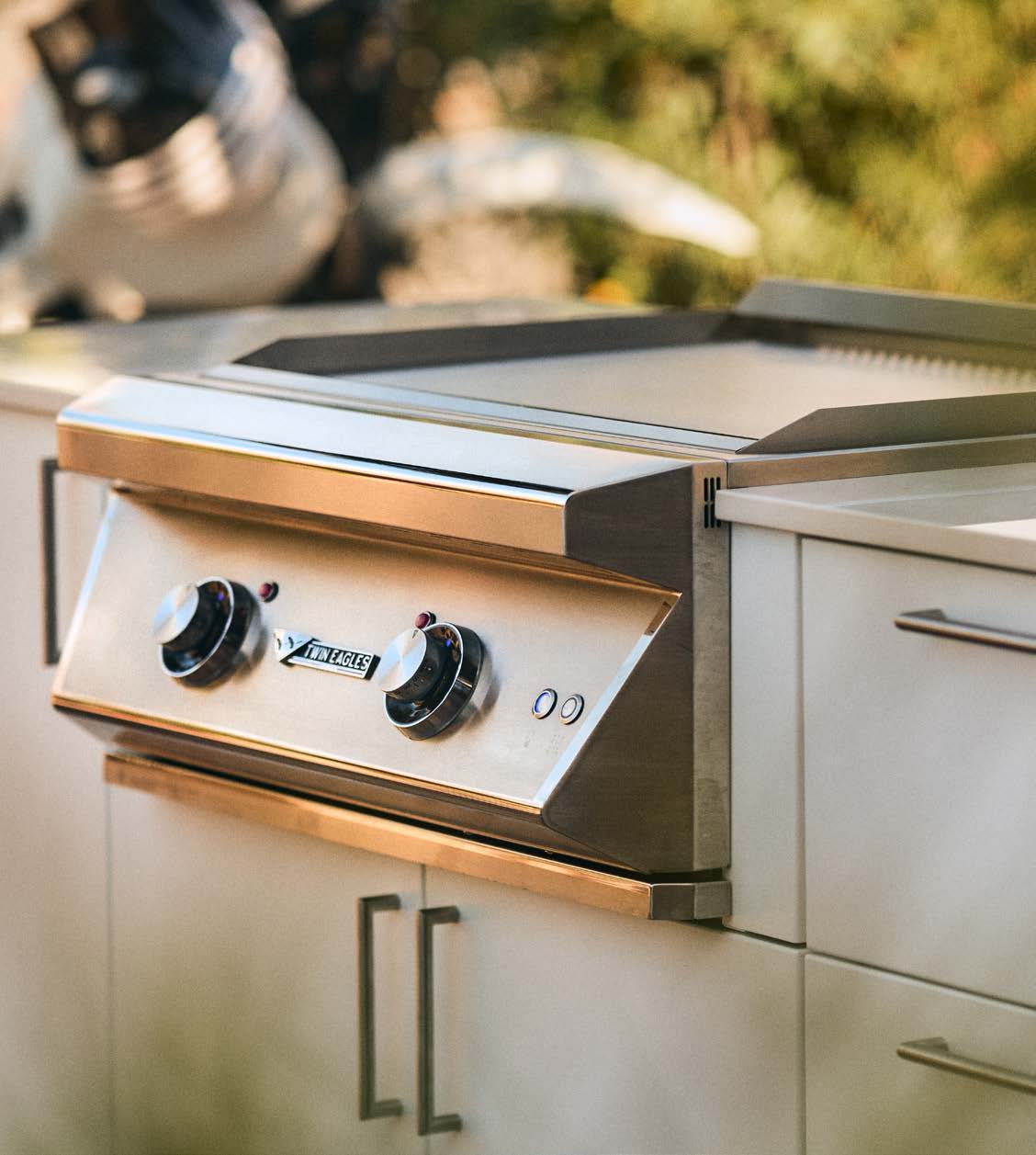
The decision
Give it a menu before you give it an opening.
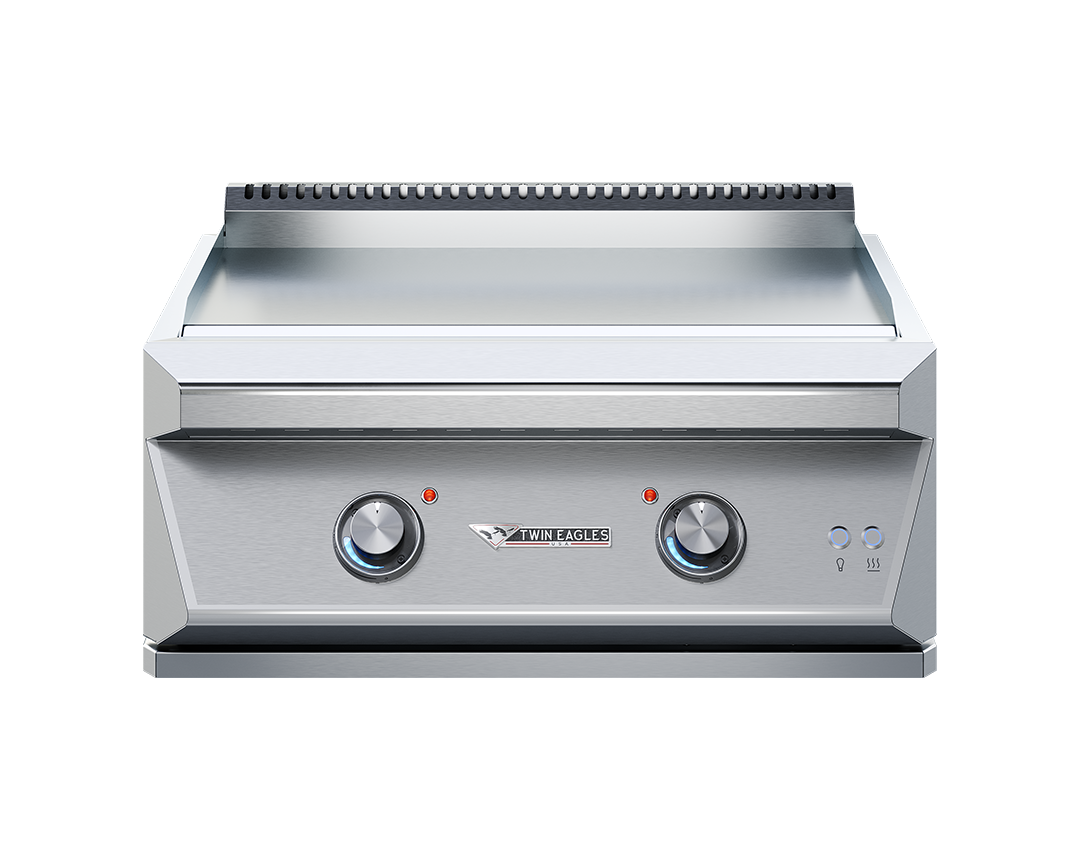
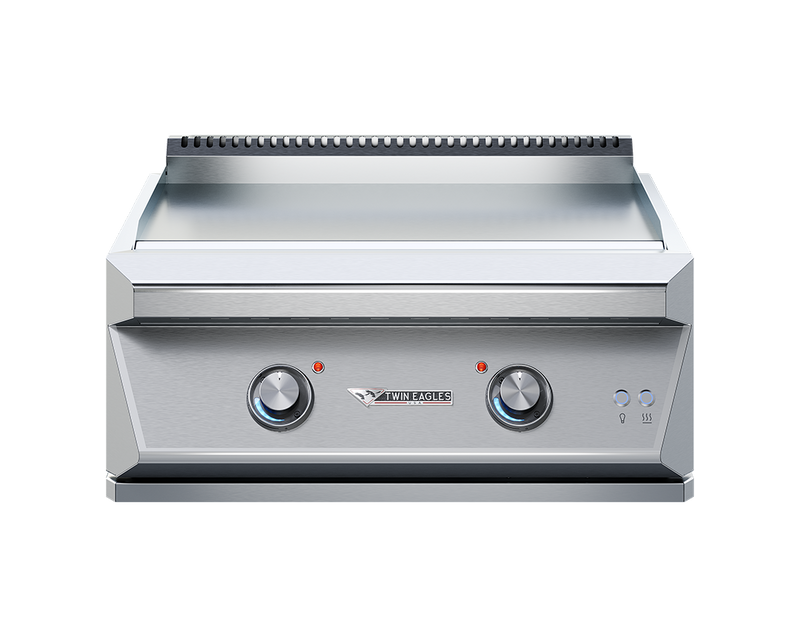
The Twin Eagles 30-inch Teppanyaki makes sense when flat-top meals are a regular part of your outdoor cooking: French toast and sausages on a weekend morning, chopped vegetables beside dinner, or a meal cooked together on one continuous plate. Its two gas burners have separate thermostatic controls, and the solid stainless-steel plate is 8mm thick. You are buying a permanent cooking station with its own controls, gas supply, electrical connection and cleanup routine.
A strong fit for frequent flat-top cooking
You want a dedicated surface ready beside the main grill, with room nearby for ingredients and finished food. You will use the two controls and are comfortable cleaning the plate and grease tray after cooking.
Pause if the island is already crowded
If a flat top would come out for an occasional side dish, first establish whether an accessory explicitly compatible with your existing grill would meet that need. Keep enough preparation space for the meals you already cook.
See the plate and grease-tray cleanup routine before deciding where the station belongs.
See it cooking
Breakfast gives the surface a purpose.
French toast and sausages on the Twin Eagles Teppanyaki.
Watch how the French toast and sausages occupy the plate. The useful question is whether you want this cooking surface available while the rest of the outdoor kitchen stays free for another job. A permanent station avoids putting a removable plate on the main grill each time, but it also commits space and utilities to that way of cooking.
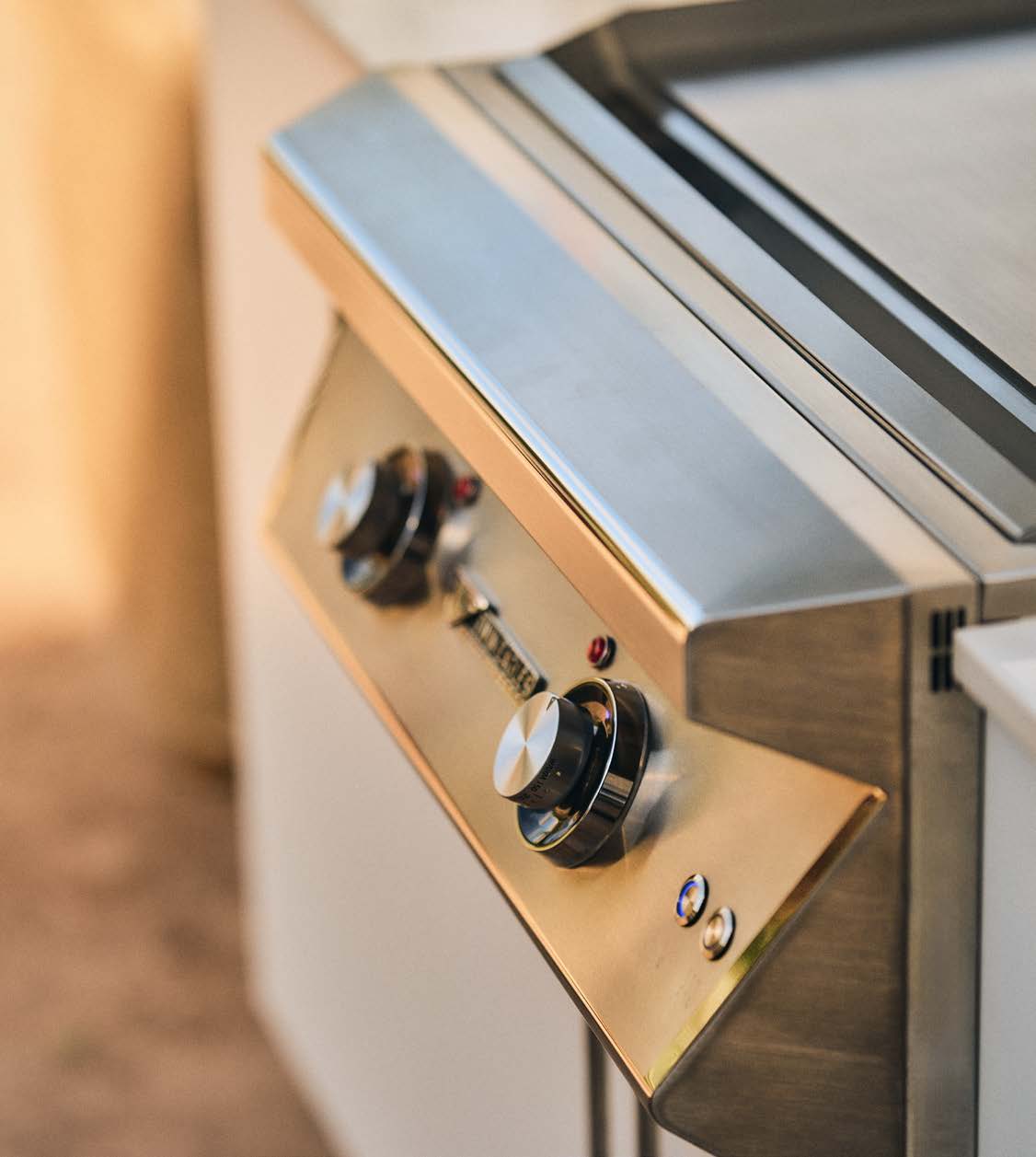
The blue control illumination helps identify the controls. The separate heat-on lights indicate when the thermostats call for heat. An extinguished heat-on light does not tell you that the plate is cool enough to touch.
What you are buying
Read the features as part of your cooking routine.
| Feature | Twin Eagles 30-inch Teppanyaki |
|---|---|
| Cooking surface | Solid 8mm stainless-steel plate |
| Heat control | Two independently thermostatically controlled gas burners |
| Total gas input | 40,000 BTU/h |
| Ignition | Hot-surface ignition with safety gas valve |
| Operating indicators | Heat-on lights and illuminated controls |
| Supplied cover | Stainless-steel cover; remove before operating |
| Built-in opening | 28½ W × 24¼ D × 11½ H inches |
| Electricity | 120V, 60Hz; specified dedicated 15-amp circuit |
| Fuel choices | Propane or natural gas |
Use the specified cutout to plan the island opening. The nominal 30-inch appliance name is not the opening width. Each thermostat adjusts its own gas burner beneath the shared cooking plate.
The cooking station
Two controls, plus room to work.
Think through a complete meal before choosing the location: ingredients ready to one side, space to move food on the plate, then a serving platter within reach. That workflow is where a dedicated station becomes useful.
Leave preparation space beside it
Before drawing another appliance into the island, place the bowls, spatulas and serving platter you would use for a normal meal on the counter. You need somewhere to set them without reaching across the hot plate. Think through where the stainless cover will go while you cook.
Keep the front accessible
The grease tray sits at the front of the plate assembly. Avoid a layout that makes it awkward to reach the controls or remove the cooled tray. Leave a direct path for serving food, separate from guests standing beside the cook.
Included and separate
- Included: the cooking plate, two thermostatically controlled gas burners and stainless-steel cover.
- Separate project costs: island construction, installation and utility work.
- The matching built-in vinyl weather cover is separate from the supplied stainless-steel cover.
This is an open-plate cooking station. Remove its stainless cover before lighting; do not treat it as a roasting hood. Keep the exact operating instructions with the appliance, including its startup and shutdown procedure.
Plan the station
A gas griddle that also needs electricity.
Plan both utilities before finalizing the island. The specification lists 120V, 60Hz, 900W and 8A, with a dedicated 15-amp circuit, a five-foot power cord and a three-prong grounding plug. The gas specification calls for a ¾-inch ID supply line and a ½-inch NPT female inlet. Have the installer check the actual supply, access and applicable electrical protection against the complete instructions. This matters during a power outage too: the manual says the griddle cannot be lit manually.
For the standard noncombustible built-in installation, the specified opening is 28½ inches wide × 24¼ inches deep × 11½ inches high. That opening is separate from the appliance’s overall dimensions. The specification calls for 12 inches minimum clearance all around; the manual details side/rear combustible clearances and overhead conditions. Give the installer the full drawings, enclosure materials and planned overhead structure together.
The manual identifies the Twin Eagles 30-inch insulating jacket for a combustible enclosure. A jacket installation needs its own applicable planning and dimensions; the standard noncombustible cutout above is not an instruction to build into wood. Ask us to help locate the matching jacket instructions before the enclosure is made.
Propane, natural gas or a freestanding station
The built-in Teppanyaki is offered in propane and natural gas versions. The shopping card below selects the propane built-in appliance; use the product page to choose the fuel that matches your supply. A freestanding Teppanyaki with a base is also available through the installation selector on that page. Its package, footprint and price differ from the built-in appliance.
Choosing a cart does not eliminate this griddle’s electrical requirement. For a built-in project, keep the gas shutoff, electrical connection and service access reachable after installation.
After the meal
The grease tray is part of the decision.
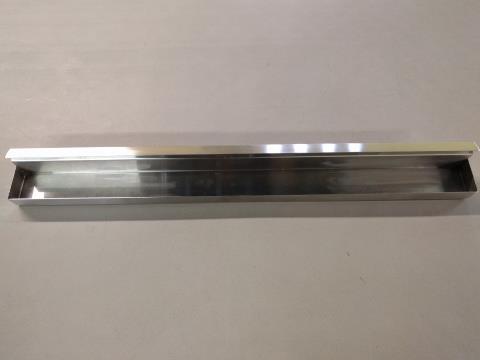
The manual recommends cleaning the tray after every use. Let the tray and its contents cool, tilt it forward and lift it out, clean it with a cloth and hot soapy solution, then fully reinsert it. That is worth picturing before you position doors, bins or other equipment below the station.
Let the griddle cool before cleaning. For the plate, follow the care instructions for removing food residue, rinsing off cleaning products, drying and applying a light coat of vegetable oil or non-stick cooking spray. Never flood a hot griddle with cold water: the manual warns that thermal shock can warp or crack the plate. Do not clean hot stainless-steel exterior surfaces or use steel wool.
Keep the appliance dry and covered when it is not in use. Near salt air, pools or masonry work, pay particular attention to the documented care requirements. Stainless steel still needs maintenance in those conditions.
Give the cleanup routine a place in the layout: somewhere to set the cooled tray, cleaning supplies within reach and a clear route back to the kitchen. Those small decisions help keep the station ready for the next meal.
Our take
Choose it for the meals you will repeat.
We like the Twin Eagles Teppanyaki for someone who already enjoys flat-top cooking and wants that station to have a permanent place beside the grill. Its independent thermostatic controls and supplied stainless cover make it a considered appliance package. The strongest reason to give it island space is a menu you will return to often.
We would keep preparation and cleanup space in the same conversation as the appliance. If fitting the griddle leaves nowhere comfortable to set ingredients or serve dinner, reconsider the layout before cutting the opening. A freestanding setup is another configuration to explore when the existing island is full.
Ratings cover the Twin Eagles Teppanyaki grills family.
Shop the Teppanyaki
Continue with the exact configuration.
Current Shopify price for the selected propane built-in appliance. The freestanding base, project work and separate accessories change the complete setup cost.
Warranty and documents
Lifetime coverage on core stainless components.
For normal residential use, Twin Eagles provides limited lifetime coverage on the stainless-steel main burners and fabricated stainless-steel components. The Teppanyaki also has two-year limited coverage and a one-year full warranty. Those are distinct terms; lifetime component coverage does not mean every part or service cost is covered for life.
Under the lifetime and two-year terms, covered defective parts are repaired or replaced while the owner pays other costs including labor, shipping and handling. During the one-year full warranty, Twin Eagles will repair or replace parts found defective at no cost to the original purchaser, with service performed by an authorized representative during normal business hours. Coverage is for the original owner of eligible products purchased and located in the continental United States or Canada, with proof of purchase and the stated registration requirements. Read the complete terms for exclusions and service responsibilities.
Before ordering
A few details worth settling first.
Let’s find the right fit for your project.
Tell us what you cook on a flat top now, whether you are adding to an existing island and which fuel you use. We can help compare the built-in and freestanding packages and find the right installation documents.
Speak to an Expert
Good questions
A clearer choice.
Does the Twin Eagles Teppanyaki need electricity?
Yes. This gas appliance also requires the electrical supply specified for its hot-surface ignition and operating system. The specification calls for 120V, 60Hz and a dedicated 15-amp circuit.
Can I cook with the stainless-steel cover on?
No. The operating instructions require removing the cover before lighting. It is not a cooking hood.
Is a weather cover included?
A stainless-steel cover is included. The vinyl weather cover shown as an accessory on the product page is separate.
Is it available without a built-in island?
A freestanding configuration is available through the product page’s installation selector. Check the selected package, fuel, total price and footprint before ordering.