




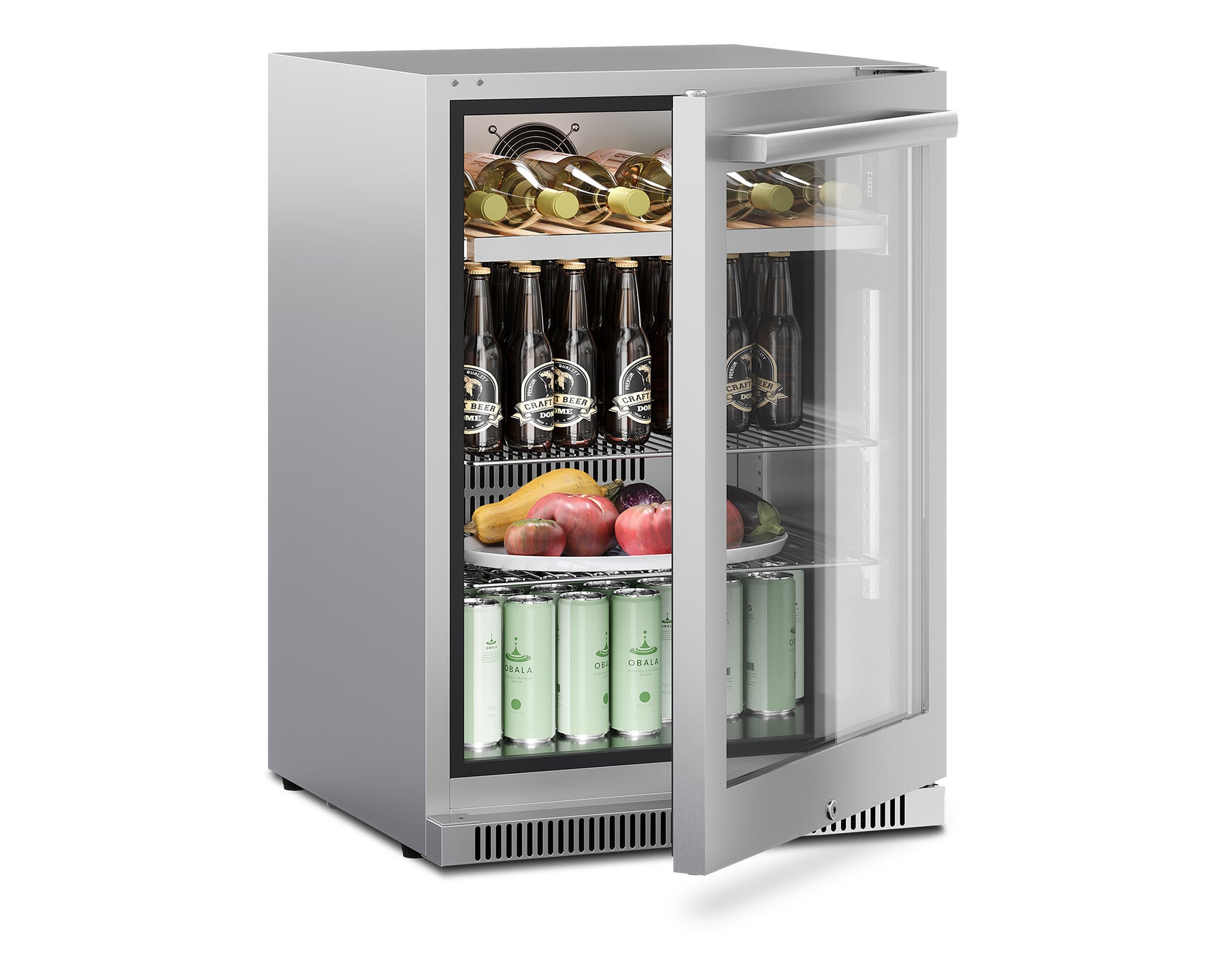
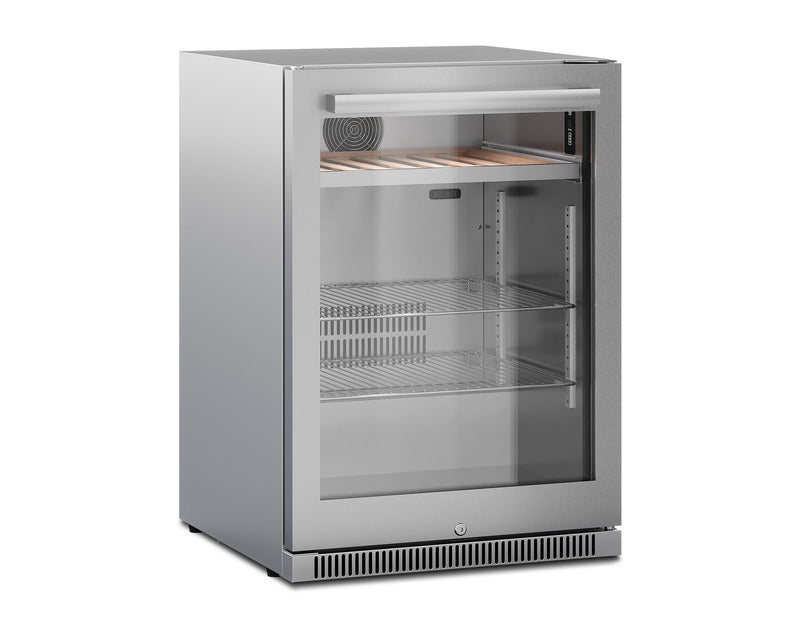
See your drinks through the glass door
Low-E, double-pane, UV-tinted glass reveals the contents while blue LED lighting illuminates the interior.
Dometic
From $4,099.00
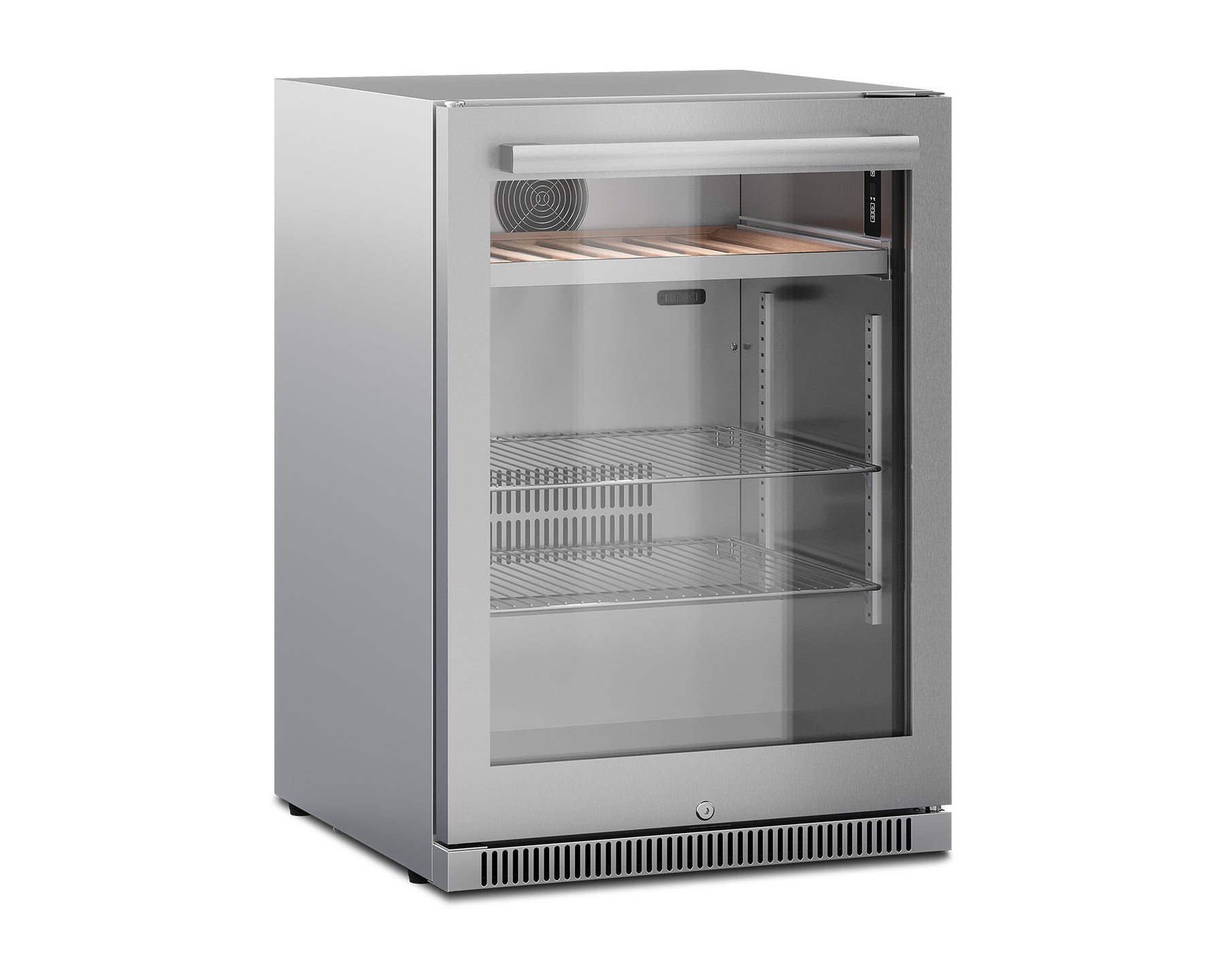
Dometic · E Series Beverage Center
Keep your outdoor drinks collection in view. A UV-tinted glass door, full-extension wine rack and adjustable shelves organize 5.3 cubic feet of chilled beverage storage.
In Stock
Low-E, double-pane, UV-tinted glass reveals the contents while blue LED lighting illuminates the interior.
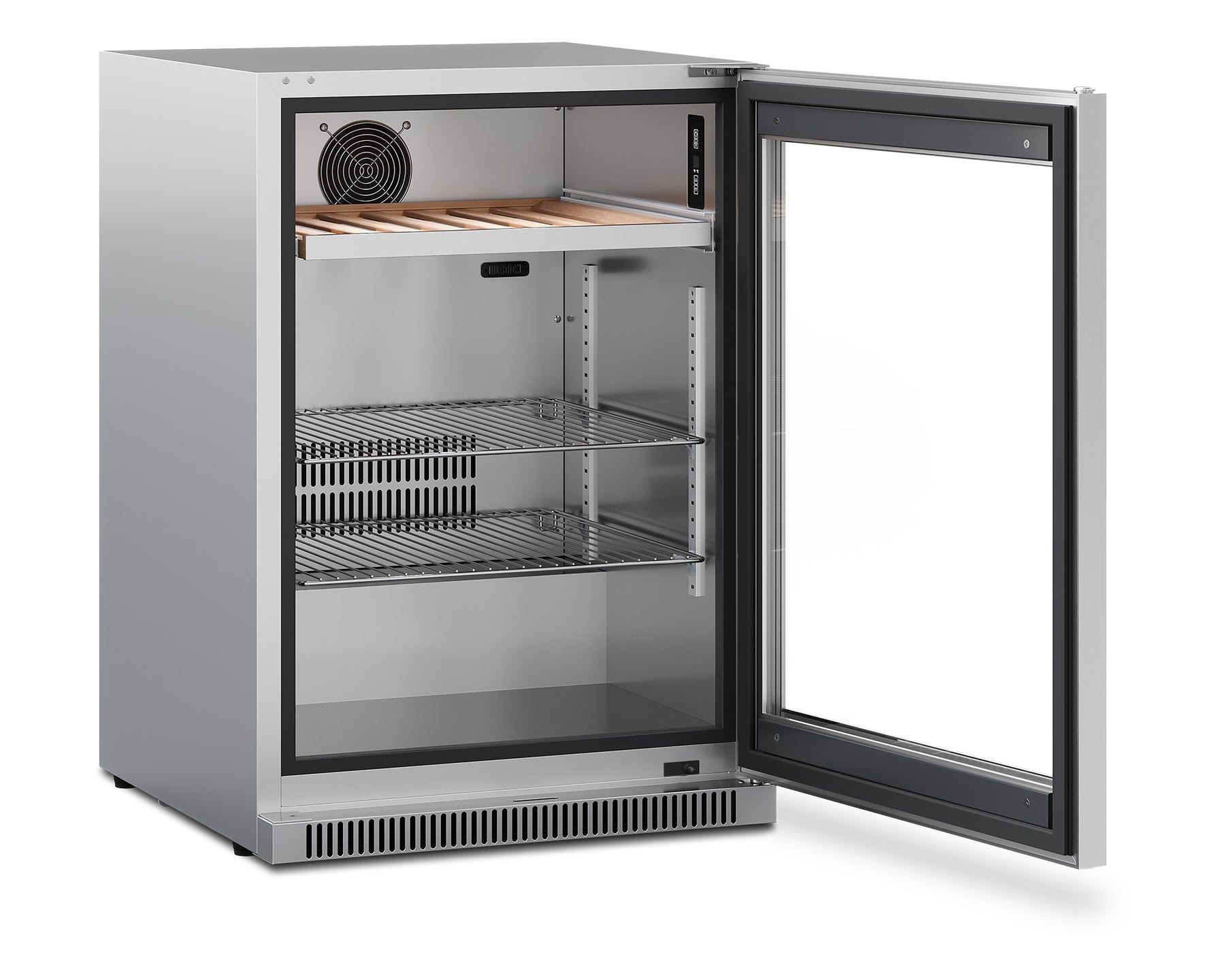
One fixed-position, full-extension wine rack and two height-adjustable stainless steel wire shelves let you organize different drink sizes.
The zero-clearance hinge is field reversible for a left- or right-hinged installation. A door lock adds security when the outdoor kitchen is not in use.
Use the digital touch panel and readout to adjust the set temperature. Outdoor-rated, forced-air refrigeration distributes cooling throughout the stainless steel cabinet.
Your selected configuration
Measure once. Plan with confidence.
Cabinet cutout; distinct from overall appliance dimensions
Confirm outlet placement and the full installation requirements in the linked E-Series manual.
Operate within the specified ambient range.
The cabinet combines one fixed-position wine rack that extends fully with two height-adjustable stainless steel wire shelves. Arrange the shelves around your bottles and cans; blue LED lighting helps you see the contents through the glass door.
Yes. The zero-clearance hinge is field reversible for a left- or right-hinged installation. Plan access around the surrounding cabinets and follow the linked manual for hinge reversal and installation.
The cabinet opening is 24 inches wide, 26 inches deep and 34.25–35.25 inches high. Overall appliance dimensions are 23.6 inches wide, 25.4 inches deep and 34–35 inches high. The shared EA24 specification gives 120V, 60Hz, 4A and 110W, with a 6-foot cord. Check the full installation and ventilation requirements in the linked manual.
RATINGS & OWNER INSIGHTS
What owners report. What our research finds.
Dometic EA beverage centers family
OUR PRODUCT ASSESSMENT
We would choose this Dometic model for a beverage display near the serving area. Its appeal is a glass-front presentation that keeps the beverage selection visible, rather than adding another appliance for its own sake. Plan the unit around how people will get drinks without crowding the cook. The applicable US instructions specify built-in beverage storage, so we would not use it as a general food refrigerator. Check the exact installation height and outdoor operating conditions before ordering, particularly when replacing an existing unit or placing it near a hot cooking appliance.
A separate outdoor beverage station can keep guests away from the active cooking area and reduce trips indoors. Put it near serving space, with enough room to open it comfortably. Think about the bottles and cans you normally use rather than relying on a maximum-capacity figure that assumes a particular arrangement.
A conventional door gives access to shelving that can be arranged around your beverage selection. Check bottle height, shelf spacing and door swing before buying. The glass-front version emphasizes visibility, while a solid door keeps the front visually quieter; neither choice replaces proper ventilation and installation.
The US instructions identify these units as beverage-storage appliances, not general food-storage refrigerators. We would keep ingredients requiring food-safe refrigeration in an appropriate appliance. Match the exact model to its instructions rather than assuming every outdoor refrigerator has the same permitted use.
Keep the specified ventilation path clear and respect the model's ambient operating limits. Direct heat from an adjacent grill and a poorly ventilated opening can undermine an otherwise attractive installation. Confirm the cabinet dimensions, electrical connection and access for service before the surrounding island is finished.
We would choose this when a dedicated outdoor drinks station will be used often and the installation suits the model. Compare the D and E cabinet specifications and the door format rather than assuming every 24-inch refrigerator is equivalent. Budget for the electrical and ventilation requirements as part of the purchase.
The family assessment pools sizes, fuel types, generations and colors. Equipment differs by configuration. The HOP score is a price-independent research assessment. Owner themes summarize the accessible sample.
Research updated October 22, 2026.
Reviews & Ratings MethodologyConfidence for years of cooking
Enjoy two years of parts and labor protection, plus five years of coverage for the sealed cooling system.
A real person. Useful advice.
Let’s talk through cooking space, fuel, accessories or installation before you choose.

From our outpost to your backyard

The Dometic story
Dometic traces its roots to the absorption refrigeration technology invented by Carl Munters and Baltzar von Platen in 1922. The business developed within Sweden’s Electrolux before the Dometic name was introduced for its leisure appliances division in the late 1960s.
That refrigeration background remains part of the brand’s engineering heritage today.
Visit the Dometic Shop by Hearth OutpostRATINGS & OWNER INSIGHTS
What owners report. What our research finds.
Dometic EA beverage centers family
OUR PRODUCT ASSESSMENT
We would choose this Dometic model for a beverage display near the serving area. Its appeal is a glass-front presentation that keeps the beverage selection visible, rather than adding another appliance for its own sake. Plan the unit around how people will get drinks without crowding the cook. The applicable US instructions specify built-in beverage storage, so we would not use it as a general food refrigerator. Check the exact installation height and outdoor operating conditions before ordering, particularly when replacing an existing unit or placing it near a hot cooking appliance.
A separate outdoor beverage station can keep guests away from the active cooking area and reduce trips indoors. Put it near serving space, with enough room to open it comfortably. Think about the bottles and cans you normally use rather than relying on a maximum-capacity figure that assumes a particular arrangement.
A conventional door gives access to shelving that can be arranged around your beverage selection. Check bottle height, shelf spacing and door swing before buying. The glass-front version emphasizes visibility, while a solid door keeps the front visually quieter; neither choice replaces proper ventilation and installation.
The US instructions identify these units as beverage-storage appliances, not general food-storage refrigerators. We would keep ingredients requiring food-safe refrigeration in an appropriate appliance. Match the exact model to its instructions rather than assuming every outdoor refrigerator has the same permitted use.
Keep the specified ventilation path clear and respect the model's ambient operating limits. Direct heat from an adjacent grill and a poorly ventilated opening can undermine an otherwise attractive installation. Confirm the cabinet dimensions, electrical connection and access for service before the surrounding island is finished.
We would choose this when a dedicated outdoor drinks station will be used often and the installation suits the model. Compare the D and E cabinet specifications and the door format rather than assuming every 24-inch refrigerator is equivalent. Budget for the electrical and ventilation requirements as part of the purchase.
The family assessment pools sizes, fuel types, generations and colors. Equipment differs by configuration. The HOP score is a price-independent research assessment. Owner themes summarize the accessible sample.
Research updated October 22, 2026.
Reviews & Ratings Methodology