









Buying guide
TrueFlame Power Burner
vs Double Side Burner
One large pot or two pans alongside the grill. Choose the cooking layout your meals need.

The decision
One cooking position—or two pans at once?
The TrueFlame Power Burner and Double Side Burner both have two controls, stainless construction and illuminated knobs. They do different jobs. The Power Burner concentrates its two burner rings under one cooking position, with a removable wok grate. The Double Side Burner puts two separate pan positions in a narrower, deeper unit.
Choose the Power Burner for the big-pot job.
It earns its place when a stockpot, a boil or wok cooking is a regular reason to cook outside. Its concentric burner arrangement puts the heat under that one vessel. Plan around the actual cookware and lifting height, rather than treating maximum output as the whole decision.
Choose the Double Side Burner for dinner’s other dishes.
It earns its place when you want pasta on one burner and a sauce or vegetables on the other while the grill handles the main course. Two pan positions can be more useful than one more powerful position if that is how you usually build a meal.
Look at the grate
Two knobs do not mean the same cooking layout.
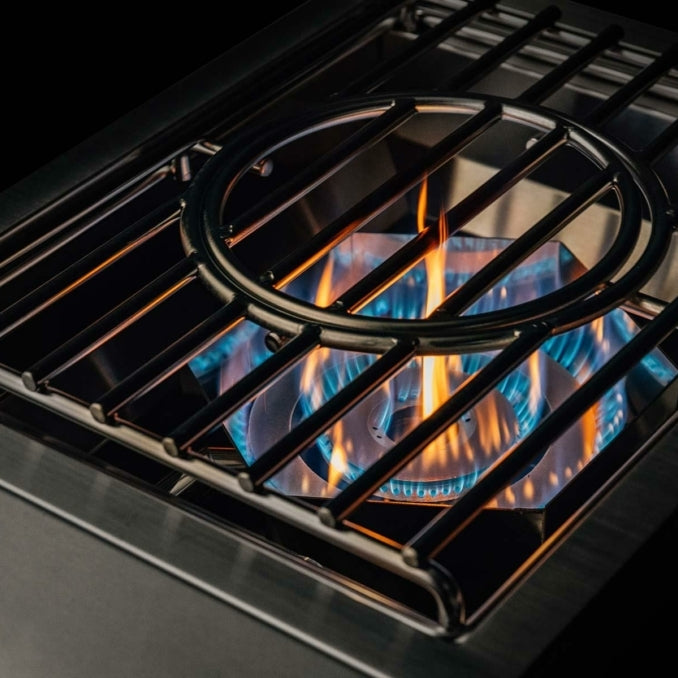
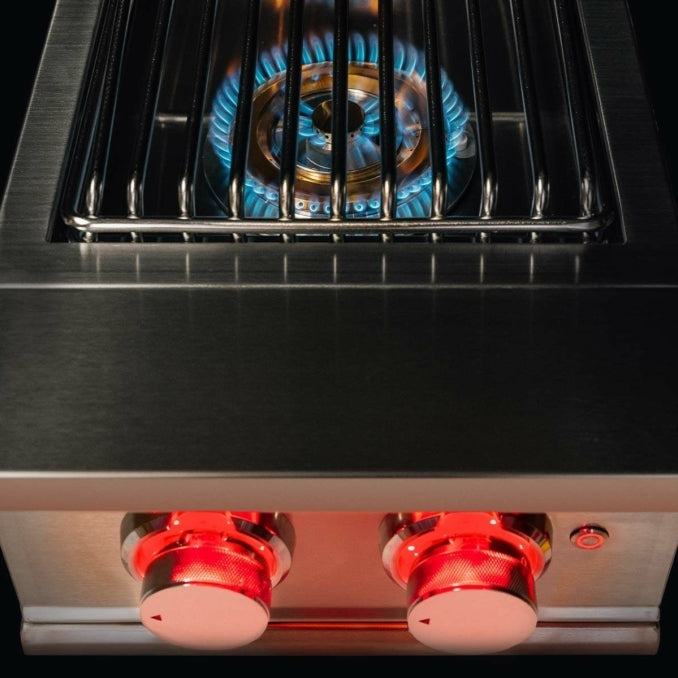
The Power Burner’s cast stainless-steel rings sit together beneath the cooking grate. The center wok support is the useful detail if you want to bring a wok into the setup. The Double Side Burner instead uses brass-plated ring burners at separate front and rear positions, each with its own control.
Picture a pot of pasta and a sauce ready to finish beside the grill: each needs its own position. Now picture one stockpot for a larger gathering: both rings can work under that single vessel. A large pot is one job, even when more than one burner ring heats it. A saucepan and a second pan are two jobs, even when their combined rated input is lower. That distinction is more helpful than counting the knobs or choosing whichever specification has the larger number.
Check the actual bases, handles and stability of the cookware you intend to use. A photograph with a large pot is not a published weight rating. Ask us to check unusual cookware before ordering; maximum burner input alone does not establish a minimum simmer or a cookware load rating.
Side by side
Match the station to the meal.
| Decision | TrueFlame Power Burner | TrueFlame Double Side Burner |
|---|---|---|
| Cooking positions | One, with concentric rings | Two, arranged front and rear |
| Burner construction | Dual cast stainless-steel rings | Two brass-plated ring burners |
| Maximum total input | 60,000 BTU/h | 24,000 BTU/h |
| Basic opening W × D × H | 14 × 18¾ × 7¾ in. | 10¾ × 20½ × 7¾ in. |
| Useful starting question | Which pot or wok will I use often? | Which two pans do I want outside together? |
For a seafood boil followed by a wok dinner another night, we would look first at the Power Burner. For a grilled main course with two stovetop sides, the Double Side Burner gives each pan a place. Choose around the jobs you repeat most often; paying for the Power Burner is easier to justify when those jobs use its one-vessel layout.
What both bring
Lighting and protection come with both.
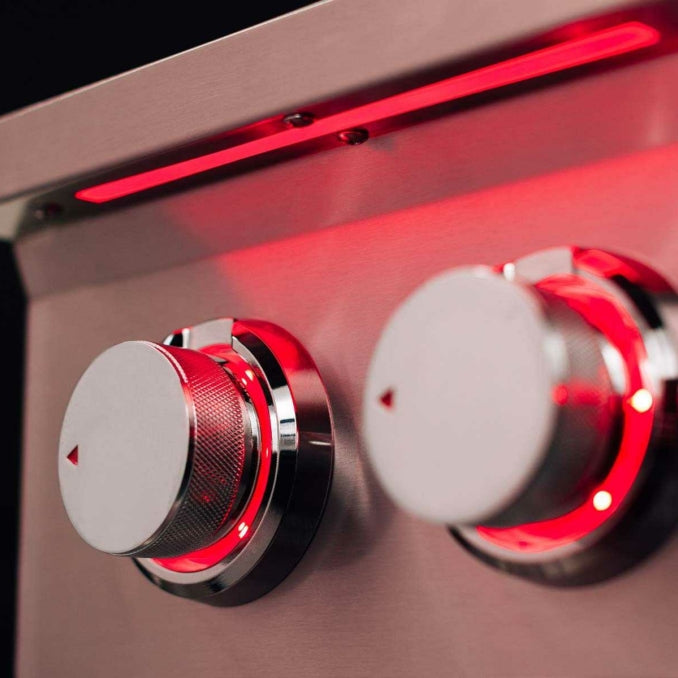
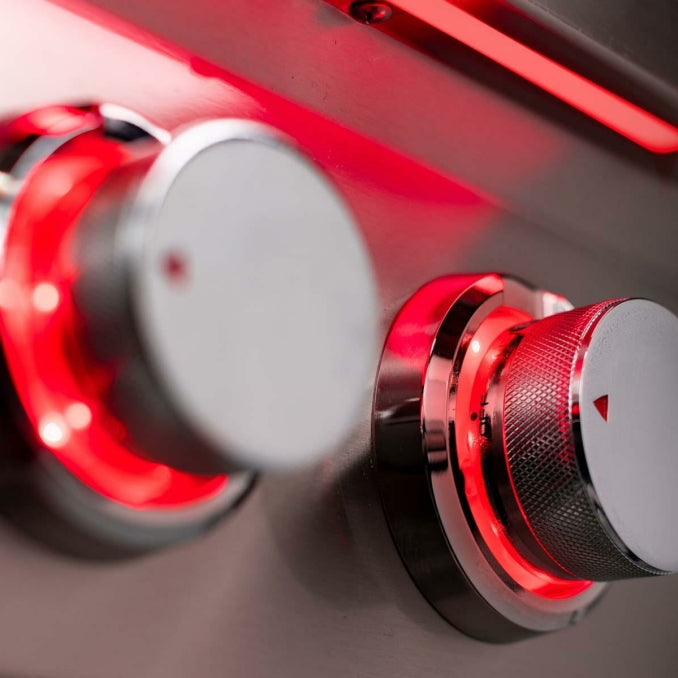
Both use 304-grade stainless-steel construction and include a removable stainless lid for protection between uses. Both have lighting behind the knobs and a full-width exterior LED bar. Those shared details help the cooker fit a TrueFlame island; lighting is not a Power Burner-only reason to spend more.
Remove the lid before lighting and follow the operating instructions. This is a protective cover, rather than a cooking hood to close over lit burners. A fitted vinyl cover is a separate accessory if you want additional protection during storage.
The LEDs use the supplied transformer connected to an appropriately rated electrical outlet. Keep that connection accessible and protected as directed, and plan it alongside the gas supply. The manual describes spark ignition separately; do not assume that lighting the knobs is the same function as lighting the burners.
The Hearth Outpost view
Let the second cooker do a job you actually need.
Our take on the Power Burner
We like it when large-pot or wok cooking is already part of the menu. The one-vessel layout makes sense for those meals, and a dedicated place for a tall, hot pot is worth planning carefully. We would give as much attention to the landing counter and comfortable lifting height as to the 60,000-BTU maximum.
It adds less value if your everyday reason for a side cooker is two small pans. More output under one position does not create a second place to finish a sauce.
Ratings cover the TrueFlame power burner family.
Our take on the Double Side Burner
We like it for keeping dinner together outside: one person can work on sauces or vegetables while the grill handles the main course. The narrower opening can also be useful in an island plan, provided its extra depth and room for both pans fit the design.
Choose the Power Burner instead when the recurring job really is a large single vessel or wok. With either unit, cookware fit and a practical working location matter more than an output contest.
Ratings cover the TrueFlame double side burner family.
What owners say
Owners value finishing sauces, pasta and sides outdoors while the grill handles the main course. The two published ratings are positive; that small sample is useful context, rather than a broad reliability record.
Plan the opening
Wider does not mean deeper.
The Power Burner’s basic cutout is 3¼ inches wider than the Double Side Burner’s, but 1¾ inches shallower. Both list 7¾ inches of cutout height. That makes the layout worth checking in both directions: a narrow strip of counter may favor the side burner, while a shallow run is not automatically better suited to it.
These are basic appliance openings, not universal installation dimensions. Combustible surrounds require the correct TrueFlame insulating jacket/liner, which changes the installation plan. Use the Power Burner liner or Double Side Burner liner for the matching appliance, and have the installer check the complete liner and burner instructions before cutting.
The shared manual distinguishes noncombustible, protected-combustible and combustible walls, with different clearances. It also specifies enclosure ventilation and overhead/exhaust requirements. A liner does not eliminate the wall, ventilation or overhead requirements. Give the installer the current manual and the actual island materials, rather than working from nominal product width.
Natural-gas and propane versions are offered for both burners. Select the configuration that matches the supply and have a qualified gas professional confirm the regulator, pipe sizing and total demand of every appliance on the line. Adding a Power Burner beside a grill is a combined-supply decision; its maximum input is not evidence that an existing connection can support it.
Shop the ranges
Continue with the exact configuration.
Both cards select natural gas. Choose propane on the product page if that matches your site, then confirm the installation and matching accessories.

TrueFlame
TrueFlame Power Burner — natural gas
$1,799.00
Natural-gas built-in Power Burner with removable wok grate and stainless lid. Propane is also offered. Matching liner when required, cover and installation are separate.
TrueFlame
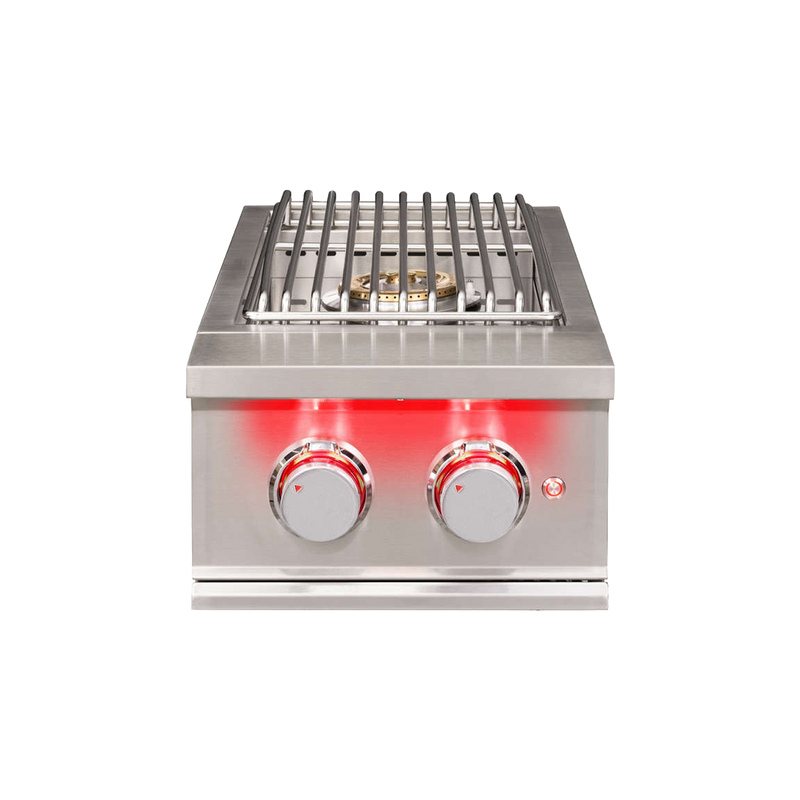
TrueFlame Double Side Burner — natural gas
TrueFlame double side burner family rating
$999.00
Natural-gas built-in Double Side Burner with stainless lid. Propane is also offered. Matching liner when required, cover and installation are separate.
Coverage worth keeping
Lifetime support on the core cooking parts.
TrueFlame’s Gold Standard warranty covers stainless-steel construction and specified cooking parts—including grates, burners and valves—for the lifetime term under its conditions. Other parts and electrical components have three-year coverage. The written terms describe covered replacement parts as 100% non-prorated, a useful positive for a cooker you plan to keep in the island.
- Listed cooking parts
- Lifetime
- Other / electrical
- 3 years
- Covered parts
- Non-prorated
Register within 30 days and retain proof of purchase and the required documentation. Coverage applies to the original purchaser at the original delivery site and covers parts, not labor or related costs. Maintenance, installation and environmental exclusions apply; stainless construction is not a promise that salt, pool chemicals or neglect cannot cause corrosion. Read the complete TrueFlame warranty.
Before ordering
Build around the meal, not the leftover opening.
Let’s choose the right second cooker.
Tell us what you want to cook beside the grill and what space you have in the island. We can help you compare the burner layouts, fuel configurations and matching liner or cover.
Speak to an Expert
Good questions
Before the island opening is cut.
Does the Power Burner have two pan positions?
Its two concentric burner rings serve one cooking position. The Double Side Burner provides separate front and rear pan positions.
Is the Power Burner always the better choice?
No. It suits recurring large-pot or wok jobs. Two independently controlled pan positions can be more useful for sauces and sides than a higher maximum output under one vessel.
Can I close the stainless lid while cooking?
The manual requires removing the lid before lighting. Treat the removable stainless lid as protection between uses, not a closed cooking hood.
Are propane and natural gas offered?
Yes. Select the exact fuel configuration for either model and have the gas connection, regulation and combined appliance demand checked by a qualified installer.
Does a liner replace the clearance requirements?
No. A matching liner is required for a combustible surround, but the complete wall-clearance, ventilation and overhead requirements still apply.